
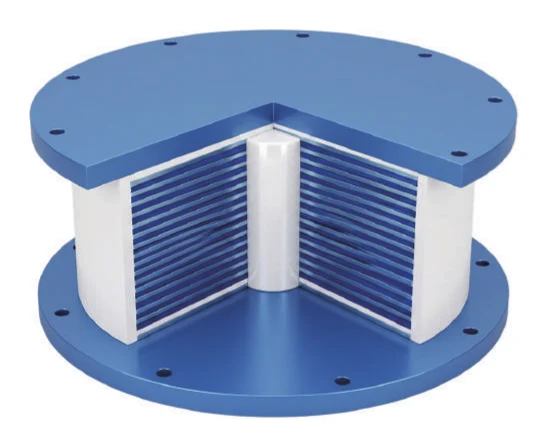
LRB
Lead rubber bearing
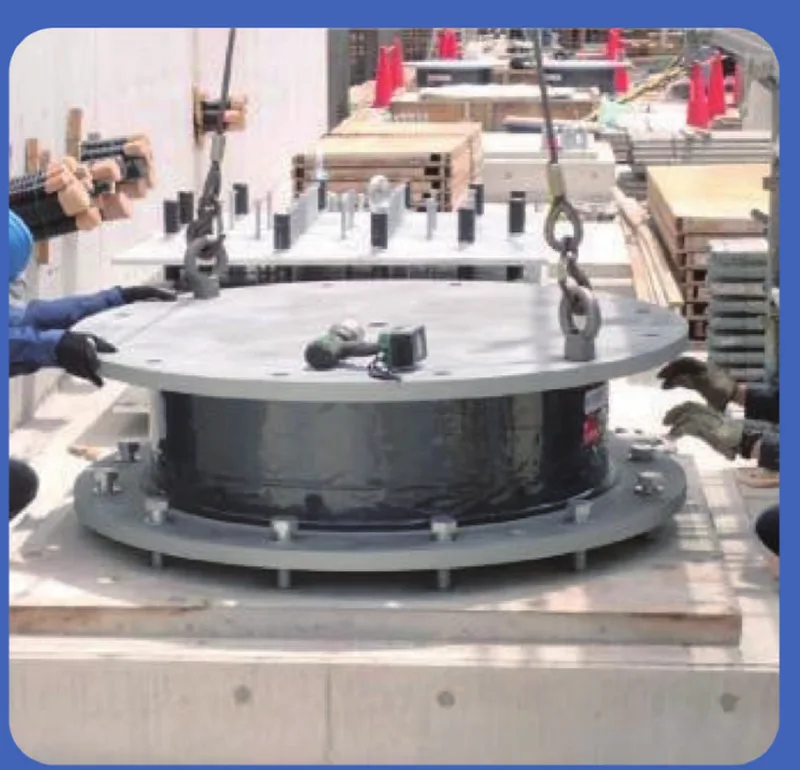
An elastomeric seismic isolation bearing with a lead core. It combines isolation and energy dissipation in a single device.
Technologies
Seven device classes solve different engineering tasks: some lengthen the period of vibration and separate the building from ground motion, others dissipate energy or provide predictable behaviour of braces. The choice is always confirmed by analysis.
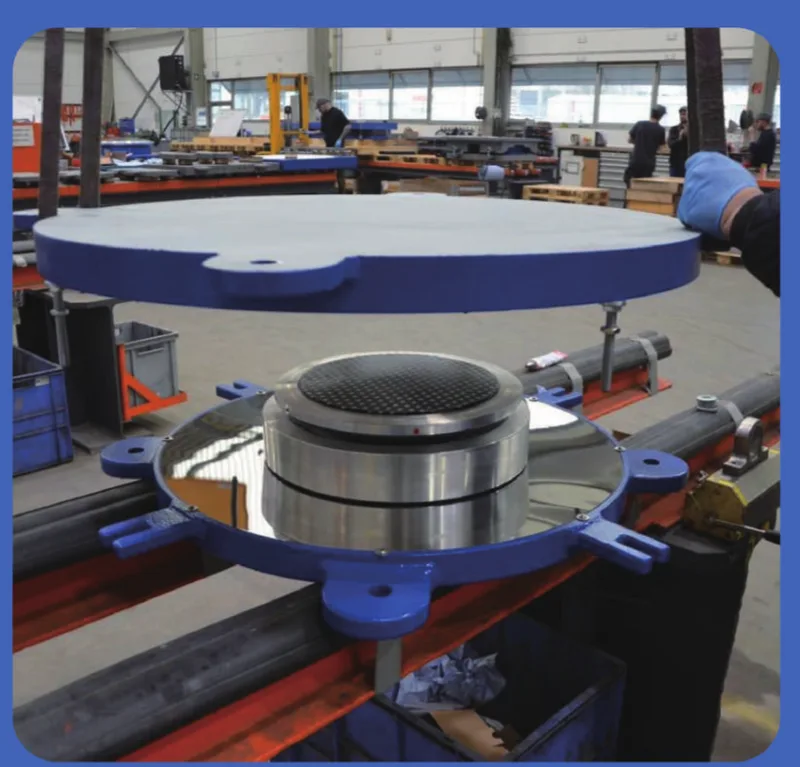
Core solutions
Device images are based on materials of the technology partner ZEP. Sizes and performance characteristics are determined by the analysis of each specific facility.
An elastomeric seismic isolation bearing with a lead core. It combines isolation and energy dissipation in a single device.
A laminated bearing without a lead core: horizontal flexibility combined with high vertical load capacity.
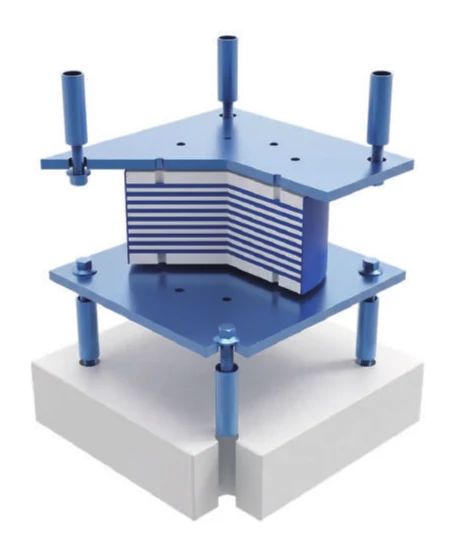
An elastomeric bearing made of rubber with increased internal damping — without a separate lead core.
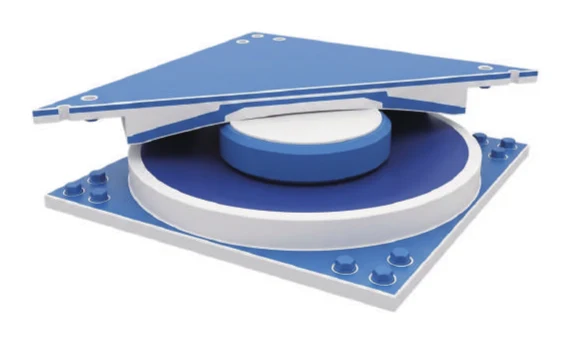
A sliding system on a spherical surface: controlled displacement and re-centring of the structure.
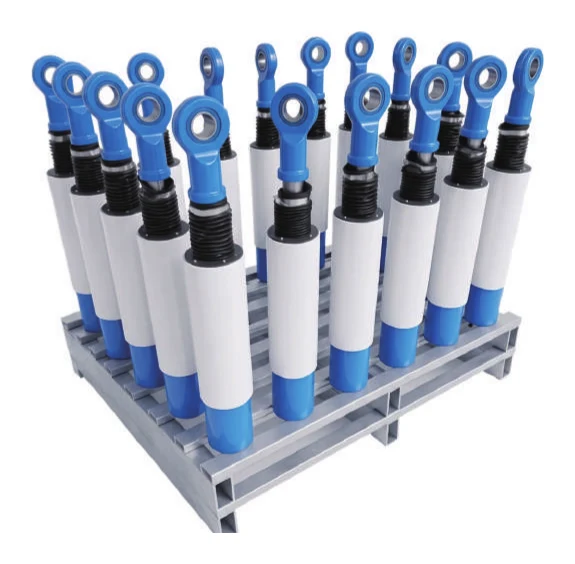
A device that dissipates energy through the resistance of the working fluid to motion.
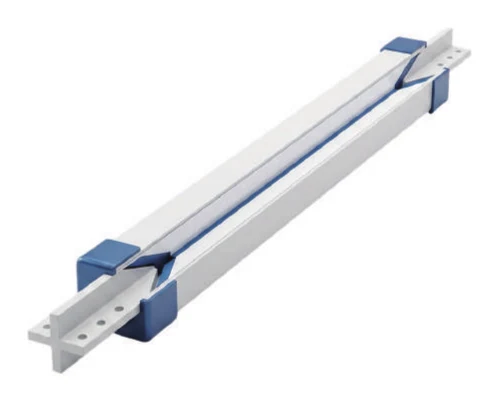
A steel damping element with controlled plastic deformation: stable behaviour in both tension and compression.
Systems that reduce both horizontal and vertical vibration effects on the structure and its equipment.
Comparison
| Device class | Working principle | Primary effect | Typical application |
|---|---|---|---|
| LRB / LNR / HDRB | Elastomeric base isolation | Longer period, lower accelerations | Buildings, social facilities |
| FPS | Friction pendulum sliding | Self-centring, stable period | Heavy facilities, bridges, tanks |
| VFD | Viscous energy dissipation | Lower displacements and forces | Tall buildings, bridges |
| BRB | Controlled ductility of steel | Predictable brace behaviour | Steel frames |
| 3D | Three-dimensional isolation | Reduction of vertical actions | Equipment, special facilities |
Methodology
Facility function, structural scheme, site seismicity, ground conditions and post-earthquake operability requirements.
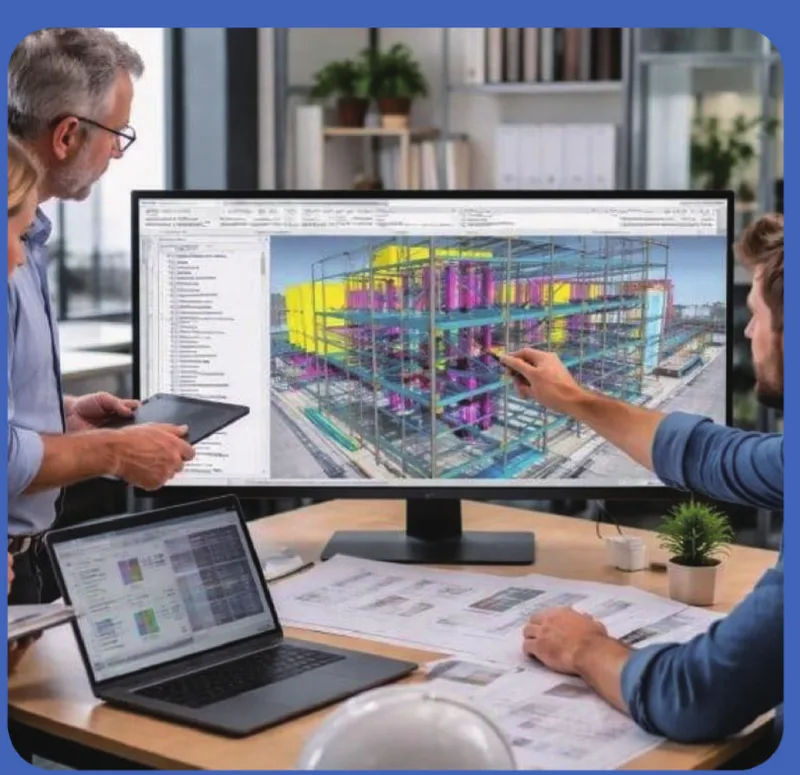
Modelling of the structure, definition of actions and analysis of the baseline case without seismic protection.
Comparison of device classes by accelerations, inter-storey drift, forces and required clearances.
Determination of stiffness, damping, stroke, load capacity and the number of devices.
Testing programme, acceptance criteria and the document package for the supplied batch.
Effect of application
In the analytical model of the Northridge earthquake for the isolation configuration considered.
In a comparative example of building response to a Hanshin-type action.
For a specific analytical model and the adopted set of devices.
Type and acceptance testing of devices on certified test rigs.
The figures are based on demonstration calculations and materials of the technology partner. Actual performance is determined by an individual analysis of each facility.
From analysis to site
Next step
Send the structural scheme and site data — we will compare device classes by analysis and propose a justified option.